1. Golding makes connections between who owns the power and who doesn’t. Ralph is the first that want to re-create the society they have lost, becoming leader. ”Shut up!” Said Ralph absently. He lifted the conch. “Seems to me we ought to have a chief to decide things.” (18). Becoming leader doesn’t mean overcoming on others and disrespect them. This is what Ralph seems to do with the boys. In the society, people who got power start to think differently referring to their society level, and often behave diffrently ones they get the power. Ralph isn’t even a leader yet and he is already changing his behaviour.
2. Golding shows, in this quote, the ability to see things differently, but also reveals curiosity to discover something. The candle buds give off light, which looks like they are a candle. Simon likes them because he feels a connection with the nature. Simon sees them as beauty, hope, light, positivity in a lonely island, but also a fragility of nature. “Like candles. Candle bushes. Candle buds.” (28). Jack slashes at them with his knife, saying that they could not help them provide food. This reveals that he only sees things in term of their usefulness to himself.
Chapter 2
3.Golding makes connections between agreements and disagreements in the leadership. Jack at first want to keep order in the society and he is excited about the new rules. On the other side, from his words seems like the rules they created are enforced: “Lots of rules! Then when anyone breaks ‘em.” “Wee-oh!” “Wacco!” “Bong!” “Doink!” He knows that more rules provide more opportunities to break them, and therefore to be punished. An important aspect of rules that prevent Jack from respecting them was the fact that he was never actually punished for breaking them. This could crate a disorder and disagreements in the leadership.
4.Golding, shows that the society always tries to get a help from science and technology, in the quote “His specs, use them as burning glasses! Said Jack. (40). This means that society always take advantage of technology. When Jack abruptly snatches the glasses from piggy’s face, it represent a victory of savagery over civilization.
5. Golding states about the flaws of democracy with this quote: “Oh, shut up!” Said Ralph feeling savage about Piggy’s knowledge. “I got the conch” said Piggy, in a hurt voice. “I got a right to speak.” (44). Golding, could be stating that if no one respects the rules then democracy won’t work. Even when Piggy has the conch shell nobody listened to him. If there is no punishment for breaking the rules, than everyone can do whatever they want, and this could create flaws in the democracy.
Chapter 3:
1. On page 51-52 Jack and Ralph argue about Ralph’s desire to build shelters and Jack’s compulsion to hunt. What points do they make to support their arguments? Who makes a more logical argument? Justify your answer. How does Jack describe his need to hunt?
They make some points to support their arguments: Ralph thinks that the shalters are more important because they serve as a protective home, for the younger boys, who fear the beast. Ralph also points that only Simon is helping him to reach their goal of surviving, the other boys are just playing, when in the meeting they all wanted to help; on the other side Jack explains to Ralph that the boys need meat and he doesn’t seem to care about the shelters, telling Ralph “You’re chief. You tell ’em off”(51). Ralph make a more logical argument, because he tries to explain that everyone act diffrently before and after they’ve taken the responsabilities. Jack describes his need to hunt telling: “We want meat.” “I went on. I thought, by myself…” “I thought I might kill.” (51)
2. What feeling does Ralph believe building shelters will illicit in the litluns?
Ralph believe that building shelter the litluns can feel more protected and safe, as they now fear from the “beastie”.
3. How does Jack feel when he is hunting?
When Jack is hunting he feels as if something is hunting him.
4. On page 56-59 we follow the actions of Simon. Find five descriptions of nature during this section. What do these descriptions say about Simon?
“Flowers and fruit grew together on the same tree and everywhere was the scent of ripeness and a booming of a milion bees at pasture.” (57); “Tall trunks bore unexpected pale flowers all the way up the dark canopy where life went on clamororously.” (57); “The whole space was walled with dark aromatic bushes, and was a bowl of heat and light.”(58); “Evening was advancing toward the island; the sounds of the bright fantastic birds, the bee-sounds, even the crying of the gulls that were returning to their roots among the square rocks, were fainter.” (58); “The slope of the bars of honey-colored sunlight decreased; they slid up the bushes, passed ove the green candle-like buds, moved up toward the canopy, and darkness thickened under the trees.” (58). These descriptions shows that Simon seems to have goodness and kindness that come from the connection between him and the nature.
5. How does Simon help the litluns?
Simon helps the litluns reach a high branch of fruit and also helps Ralph build a shelter for them.
Chapter 4:
1. As Golding describes a typical day on the island he writes, “At midday the illusions merged into the sky and there the sun gazed down like an angry eye” (60). What literary device is this an example of?
This is an example of personification.
2. He goes on to write, “When the sun sunk, darkness dropped on the island like an extinguisher and soon the shelters were full of restlessness, under the remote stars”(61). What literary device is this an example of? What do you think Golding meant by this quote?
This is an examle of similie. I think Golding meant that the light and hope of the boys are extinguished by the darkness.
3. On page 61 how does Golding describe why the Litluns still obey the conch? How do these reasons connect with the politics of today?
Golding describes why the Litluns still obay the conch telling: “They obeyed the summons of the conch, partly because Ralph blew it, and he was big enough to be a link with the adult world of authority; and partly because they enjoyed the entertainment of the assemblies.” These reasons connect with the politics of today because people think that politics are a responsible and mature authority and they want to get involved in something important like this.
4. On page 62 how were the kids playing in the sand described? How does Roger’s actions towards the kids connect to the larger allegory?
The kids playing in the sand were descried as creating a new civilization: a castle around which there was a complex of marks, tracks, walls and railway lines. Roger destroyes their sand structue kicking, burying and scattering, this represent that he has no heart, he is dark inside and because all this was funny to him, he is also selfish.
5.How does Maurice react to the situation?
Maurice followed Roger in the destruction laughing, but when Percival starts crying because he got sand in his eyes, he felt guilty and he hurries away from there.
6.What do you think the symbol of the mask represents? In what aspects of life do people wear masks in order to accomplish something?
The symbol of the mask represent hiding their educated and civilized ways and letting out ther dark side of a monster. People wear masks because they want to hide their personality but they can also show how they really are without revealing their identity.
7. What does Ralph spot on the horizon?
On the beach, Ralph and Piggy see a ship on the horizon but they also see that the signal fire has gone out. They hurry to the top of the hill, but it is too late to rekindle the flame, and the ship does not come for them.
8.Why is the signal fire out?
The signal fire is out because the hunters went hunting, and couldn’t leave the fire by itself.
9. What violence does Jack commit toward Piggy?
Jack punches Piggy in the stomach and smacks him in the head, breaking his glasses.
10. How did the hunters kill the pig?
The hunters hit the pig, then fall on top of it, cutting its throat
11. Who gives Piggy meat despite Jack’s objection?
Simon gives Piggy meat despite Jack’s objection.
12. Find three examples in the chapter of the boys becoming more savage.
When they painted their faces, hiding their good personality and releasing their inner monster without remorse.
When they were exited over the blood and they ignored Ralph.
When they danced and sang “Kill the pig. Cut her throat. Bash her in.” (79)
1. What were the differences between the meeting on page 30 of chapter 2 and the initial meeting in chapter 1? Why is this significant?
The differences between the meeting in chapter 1 and chapter 2 are that in Chapter 1, the boys seem determined to re-create the society they have lost, by choosing a leader and in Chapter 2, they decided to have an organization, setting some rules to follow because they know that it can took some time before they get rescued.
2. How does the conch seem to represent structure and order on page 31?
The conch represents structure when Ralph use it to call the others, that symbolizes civilization and organization. It also represents order because whoever holds the conch shell, has the right to speak while the others have to stay silent.
3. How does Jack suggest that rules they create are enforced? Why do you think he does this?
Jack suggested that the rules they create are enforced by saying: “Lots of rules! Then when anyone breaks’em”. “Whee-oh! Wacco! Bong! Doink!”. I think he does this because more rules provide more opportunities for people to break them, and therefore to be punished. An important aspect of the rules that prevented Jack from respecting them was the fact that he was never actually punished for breaking them.
4. On page 33 what is the kids plan to live on the island?
The kids plan to live on the island is to look after theirselves because there are no adults in the island. They want to have a good time with food, water, rocks and blue flowers until the ‘grown ups’ come to get them.
5. On page 34 and 35 they discuss the beastie. How is it’s discussion represent the fear of the children?
The beastie represent the fear of the children because Ralph tells that it was only a nightmare, laughing and looking for confirmation on the faces of the other boys. Nobody was completely sure about it, until Jack said that if there were such thing they’d have killed it. This makes everyone even more afraid than before.
6. Who is the most keen on being rescued? What is the plan to accomplish this?
Ralph is the most keen on being rescued, because he tells that his dad is in the Navy and he knows on what island they’re on, so he will rescue them. The plan, established by Ralph, is to starting a fire on the mountain, so the smoke will be more visible, and signal to the passing ships that there are people on the island.
7. Who pessimistically introduces the idea that they may never get rescu±ed?
Piggy, pessimistically introduces the idea that they may never get rescued because he thinks nobody knows where they are now, everyone knows only where they were heading to.
8. What could Piggy’s glasses represent? How were they taken from Piggy? What could Golding’s be implying about the larger allegory?
Piggy’s glasses represents intelligence and rationality. They were taken from Piggy to focus the sunlight and set the wood on fire. Golding’ s be implying about Piggy, who represents the scientific, intellectual and technological aspects of civilization. The society always takes advantage of science and technology
9. Piggy tries to introduce some logic about the size of the fire stating, “You say you wanted a small fire and you built a pile like a hayrick. If I say anything, ‘cried Piggy, with bitter realism’ you say shut up; but if Jack or Maurice or Simon” (43). What could this quote be saying about how people engage with ideas?
This quote could reffer to people who only listen to people they like. The boys didn’t listen to Piggy but preferred Ralph because he is the leader and bescause they like him as a “fair person”.
10. On page 44, what feeling makes Ralph feel savage?
The feelings of causing damage and distruction on the beautifil island makes Ralph feel savage. Setting the fire was the wrong idea because all the forest cathes fire destroying everything.
11. Piggy repeatedly says, “you got your small fire alright” (44). How is this an example of irony?
This is an example of irony because before this quote the fire burnt out half of the forest as Piggy said before the irony: “You said you wanted a small fire and you built pile like a hayrick.”
12.Piggy struggles to use the power of the conch to speak and get the other children’s attention throughout the chapter. What could Golding be stating about the flaws of democracy with these examples?
Golding, with these flaws of democracy could be stating that if no one respects the rules then democracy won’t work. Even when Piggy has the conch shell nobody listened to him. If there are no punishment for breaking the rules, than everyone can do whatever they want, not following the rules.
1. The result of the plane crash on the island is described as a scar on page 1. If Golding is writing the story as an allegory of the nature of mankind what could the scar represent?
The scar represents something that destroys the nature. In the nature of mankind, man always tried to change the nature in a negative way
2. Ralph is initially described as a ‘fair boy‘ on page 1 and 2. Why do you think this is?
I think Ralph is described as a “fair boy” because he has fair hair and size, typical of a 12-year-old boy. He also seems attractive than the other boys.
3. How is Piggy described in this chapter. What do you think he could represent in the larger allegory?
Piggy is described as an overweight, asthmatic boy who wears glasses. He is intelligent and not very good at physical labor. He is around 12 years old and looks more mature than the other boys. Piggy represent intelligence and rationalism.
4. What is a conch? How is it described on page 11.
The conch is simply a shell, but when Ralph and Piggy discover how loud it is when blown into, it attains its first symbolic meaning of organization.
5. As the boys gather around Ralph on the island Golding writes, “The children gave him the same simple obedience that they had given to the men with megaphones” (14). How does this quote add to the symbolism of Ralph and the conch?
This quote adds to the symbolism of Ralph and the conch because it represents the authority.
6. How is Jack described on pg 16 and 17? What do you think he could represent in the larger allegory?
Jack is described by Golding as “tall, thin, and bony; and his hair was red beneath the black cap. His face was crumpled and freckled, and ugly without silliness. I think in the larger allegory he could represent a dictator because he wants everyone’s attention and most of all he want to be the leader.
7. On page 18 the boys argue about who should be leader. How does this conflict highlight two forms of government?
The two forms of government are: Democracy (Ralph) vs Dictatorship (Jack).
8. The boys decide that they will vote and Golding describes it as,”this toy of voting was almost as pleasing as the conch” (18). How does this description illustrate Golding’s view of democracy?
This description illustrates Golding’s view of democracy because the platform that the boys use as a place to vote is symbolism for democracy.
9. What characteristics were described to Ralph in connection with his election as leader? What is Golding saying about how we choose our leaders?
Ralph is described as a powerful, attractive and seems bigger and conscious than the other boys because of his appearance. He is important because of the conch. Golding is saying that we choose our leader on their appearance, whoever proves to be a good leader and takes charge of it.
10. What is significant in the connection of Simon and the ‘Candle buds‘? How does Jack respond to the ‘Candle buds‘?
The connection between Simon and the Candle buds represent spirituality , light and hope. When Simon talks about them, Jack ignores him and changes the topic.
11. Why are the kids unable to kill the pig at the end of the chapter? What does that reveal about theme at this point in the story?
The kids are unable to kill the pig because they don’t want to admit the fact that they’re afraid to kill another thing and see the blood. At this point the theme of fear appears in the story.
The Weird Sisters are plotting to meet Macbeth in this scene and the theme seems to be unnatural with discrepancy between appearance and reality. There is also the presence of pathetic fallacy because the weather, thunder, rain and lightning, foreshadows witches evil and mysterious characters.
Act 1 scene 2
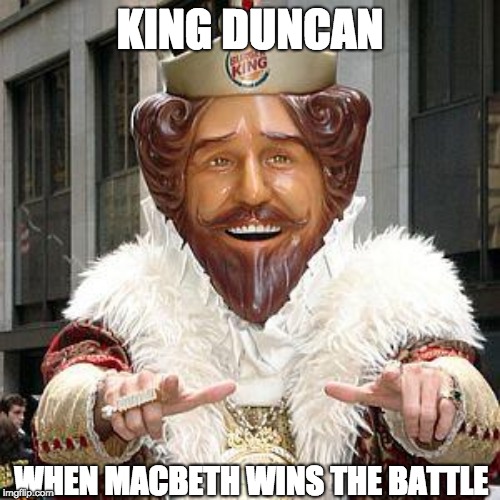
king Duncan in this scene respects the nobility and loyalty of Macbeth, which are the major themes in this scene. He is responsible for the victory and Duncan proclaims him Thane of Cawdor. Ross is sent to announce the news to Macbeth.
Act 1 scene 3
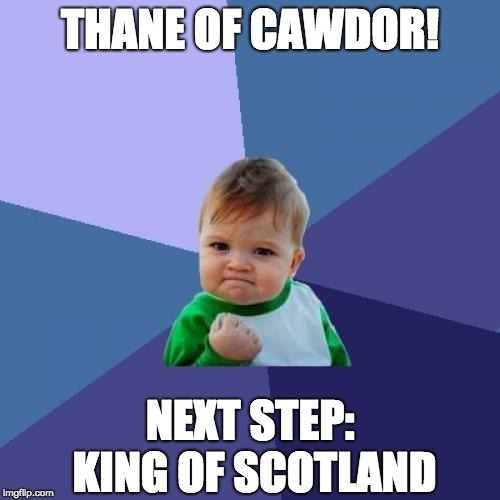
The witches meet Macbeth in this scene and tell him about the prophecies. There is the presence of pathetic fallacy and foreshadowing. Macbeth is confused at first but when they vanished, Ross arrives and announces Macbeth Thane of Cowdor. He then starts thinking about the Weird Sister’s prophecies and how he can become king of Scotland. Also the theme of ambition is present.
Act 1 scene 4
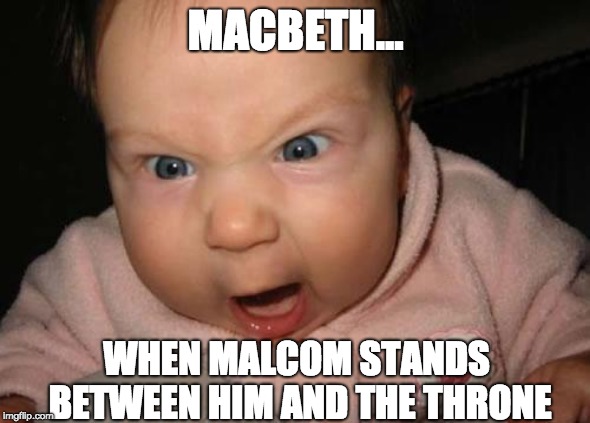
At king’s palace Macbeth and Banquo enter with Ross and King Duncan announces his attention to name his son Malcom, the heir to his throne. Macbeth is shocked and decides that nobody will stand between him and his throne. Ambition grows in Macbeth as he reminds himself about the prophecies.
Act 1 scene 5
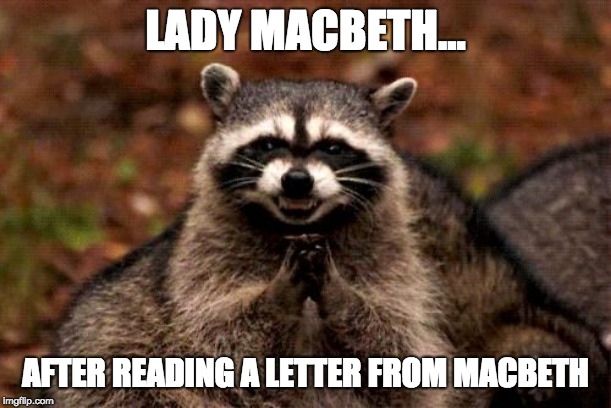
Lady Macbeth reads a letter from Macbeth and finds out about the witches’ prophecy that he will be king. Lady Macbeth then discovers that King Duncan will come to Macbeth’s castle that evening. She decides that it is her chance to act and plot about Duncan’s murder. She is evil and ambitious but also mysterious.
Act 1 scene 6
King Duncan arrives at Macbeth’ s castle, complimenting Lady Macbeth, for her hospitality. Lady Macbeth greets with him appreciating his decision to make Macbeth Thane of Cawdor. Outside she seems so grateful and caring but the audience know how evil she is inside. This is also a Dramatic Irony because the audience know that Lady Macbeth is plotting Duncan’s murder but he is not aware of it.
Act 1 scene 7
When Lady Macbeth tells Macbeth to kill Duncan, he declares that he no longer intends to kill him. Lady Macbeth is able to persuade her husband to go through with the plan to murder Duncan, by insulting his masculinity. In this scene she seems stronger than Macbeth by manipulating him to reach the goal of their common ambition.
Act 2 scene 1
In this scene Macbeth is having a hallucination about a “floating dagger” in front of him, which symbolizes his guilt. Macbeth hasn’t yet committed the murder but his conscience is already riddled with guilt. The major theme is Macbeth’s guilt along with his ambition that he can’t ignore anymore.
Act 2 scene 2
Lady Macbeth seems to be courageous and calm as she has to support her husband Macbeth who has just killed king Duncan. She is not aware of her real personality in fact she thinks to appear strong and evil but inside she feels guilty for Duncan comparing him to her father. Macbeth is still disturbed after Duncan’s murder, but Lady Macbeth gets the job done, planting the weapons and smearing the attendants with Duncan’s blood. Macbeth is not conscious anymore, when Lady Macbeth tell him to wash his hands and go to sleep. The fear overcomes her when there is a knocking at their door.
Act 2 scene 3
In this scene, Lady Macbeth takes center stage to divert the attention away from herself and Macbeth. She acts clueless, pretending not to know what has happened and where. So there is a presence of Dramatic Irony because the audience know who is responsible for Duncan’s murder but not the other characters in the play.
Act 2 scene 4
In this scene the unnatural occurrences include the sky becoming dark during the middle of the day, a lesser owl killing a mighty falcon, Duncan’s horses breaking out of their stalls and killing one another, and the violent weather destroying homes. All of these occurrences represent nature’s discontent with Duncan’s death. There is a discrepancy between unnatural events and the reality of Duncan’s murder.
Act 3 Scene 1
Macbeth feels that he must kill his friend Banquo and the young Fleance in order to prevent the third prophecy from becoming realized. He wants to put an end to such worries by hiring two men to kill Banquo and Fleance. He tells them that Banquo is his own enemy as much as theirs, by blaming him about the murderers’ status of poverty. Macbeth is now out from his disturbed-state of mind and become more strong as Lady Macbeth’s character seems to become more weak. Their characters are switched.
Act 3 Scene 2
Lady Macbeth expresses her unhappiness: there seems to be no end to her desire for power and she feels insecure and anxious. Macbeth and Lady Macbeth decide to do a banquet in the evening and to put on happy faces for their guests. She is not aware of her state of mind that is slowly realizing her mistakes.
Act 3 Scene 3
Macbeth sends three murderers to attack Banquo and his son Fleance . In the forest the murderers’ lantern is accidentally extinguished, and the job is left half-done: Although Banquo is killed and Fleance escapes. This confirms the witches third prophecy: Banquo will father a line of kings.
Act 3 Scene 4
During the banquet, Banquo’s ghost appears and is sitting in Macbeth’s seat. Macbeth is unnerved and aggressively commands the ghost to leave him alone. Banquo’s ghost is a manifestation of Macbeth’s guilt and fear. Macbeth fears about the witches prophecy, that could come true, so Banquo’s death connects to the theme of ambition and Fleance’s escape create a panic attack in Macbeth so he become more and more deteriorating.
Act 3 Scene 5
Hecate, queen of the witches, is angry with the Weird Sisters for approaching Macbeth without her permission. She instructs them how to deal with Macbeth and reveals that it is her plan to destroy Macbeth by filling him with over-confident. In this part she also foreshadows Macbeth’s fate: Macbeth thinks that he is untouchable but this is just the beginning of his downfall.
Act 3 Scene 6
Lennox and another Lord discuss recent events in Scotland. They are convinced that Macbeth is responsible for the murders of Duncan and Banquo. Macduff, suspicious of Macbeth, joined Malcom in England to prepare a military force to rid Scotland of Macbeth’s bloody tyranny. They are preparing for a war. The major theme of this part is violence.
Act 4 Scene 1
Macbeth returns to the Weird Sisters to get more information about himself and Banquo’s descendants, as he suspect they will become kings. The witches, calling Macbeth wicked, show him the prophecies: an armed head, a bloody child and a crowned child with a tree in his hand. The last prophecy was a show of eight Kings, and Banquo last, with a glass in his hand. Macbeth was now more confident, but he was also confused especially when the Weird Sisters disappeared.
Act 4 Scene 2
Lady Macduff and her son’s conversation in this part serve as a comic relief, as the calm before the storm. This tells that both, Lady Macduff and his son are innocent and Macbeth kill them without any reason, that is why their murder differ from Macbeth’s previous crimes. Macduff abandoned his family to go to England but after he left his son and Lady Macduff are killed. There is the theme of violence, over-confidence and ambition.
Act 4 Scene 3
Malcom tests Maduff’s loyalty by telling Macduff that he wouldn’t be a good king and he’d betray his own country. Macduff clear his throat by telling him that he couldn’t stand for this, he doesn’t want to be a king and always supports him and his country. Macduff than hears the news from Ross that Macbeth has murdered his family. Malcom encourages Macduff to convert his grief to anger and to get revenge. The major theme is violence and revenge.
Act 5 Scene 1
Lady Macbeth has been observed sleep-walking and talking for several nights. In this scene Lady Macbeth is wracked by guilt. She is so overcome with her role in the murder of King Duncan that she cannot rest. She sleepwalks, writes, and tries over and over again to wash her hands, but she cannot get the blood out because it is no longer there. It is in her mind. Even the doctor cannot cure her because she need ‘something for her soul’. She becomes more weak and sensitive because of her guilt, major theme in this scene.
Act 5 Scene 2
A Scottish army is on its way to join up with the English forces led by Malcom and Siward. Revenges burn in them, especially in Macduff. On the other side, those who continue to serve Macbeth do that only for fear not love or loyalty. At this point of the play all know the truth of Macbeth and hope that his tyranny will end soon. The major themes are fear and revenge.
Act 5 Scene 3
After hearing the news about the English forces, approaching his castle, Macbeth remains confident that he cannot be defeated, because of the prophecies. The theme of unnatural appears because Macbeth seems to controlled by the witches prophecies. In his over-confidence, Macbeth is ready to fight his enemies, so he puts on his battle garb, while he discuss Lady Macbeth’s condition with the doctor.
Act 5 Scene 4
Malcom and the English forces, on their way to Macbeth’s castle, stops to cut branches from the tree. Malcom orders the soldiers to use them to hide theirselves during their march towards Macbeth’s castle.
Act 5 Scene 5
In an atmosphere of violence, Macbeth feels secure behind his castle but he is distracted by the cry of women and is informed that his wife is dead. At this point he thinks about the meaninglessness of short life comparing it to a candle and a walking shadow.
Act 5 Scene 6
Malcom arrives at Macbeth’s castle with his forces and he orders the soldiers to drop their branches and to attack. Siward leads the attack and Malcom follows behind Macduff. The major themes are violence and revenge.
Act 5 Scene 7
Macbeth in this scene abandons the security of the castle and challenges all soldiers on the battlefield. He is aware that he has no escape but he is still confident. The Weird Sister’s second prediction: ‘non of woman born shall harm Macbeth’ lead him to an over-confidence that will soon result in his downfall. After the young Siward is killed by Macbeth, Macduff appears to get his revenge. Macbeth’s over-confidence is leading him to his downfall.
Act 5 Scene 8
Macduff and Macbeth fights against each other. At first, Macduff does poorly against Macbeth but when he reveals to him that he was “ultimely ripped” from his mother’s womb, Macbeth refuses to fight with him. The theme of unnatural reappears considering the second prediction of the witches and Macbeth seems also shocked. Finally all the violence, over-confidence, tyranny, evil crimes and fears finish with Macbeth. Macduff kills Macbeth and finally get revenge for his family. The scene ends with Malcom, who is hailed ‘King of Scotland’.
1. What are the genres of the two cartoons being crossed over?
The two cartoons being crossed over are: The Smurfs and the Batman franchise. The genre of Smurfs: The Lost Village, is an animated comedy film and the genre of the Batman animated series is Superhero fiction.
2. How does the author display their knowledge of both cartoons? Note 5 references to each cartoon.
The author display the knowledge of both cartoons through these references:
Batman animated series
Gargamel replied “Hello Mr, joker i have heard good things about you. i hear you are the clown prince of climb”.
Gargamel asked ” Do you have to laugh after everything you say?” The Joker said “I guess I wouldn’t have to if I wasn’t so amazingly funny. Ha, ha, ha!”
Smurfette said “Oh no. It’s Gargamel and someone new.” The Joker said “New? I was created in 1940. Ha, ha, ha!”
The Joker replied “Oh be quiet you brat. I’m the most dangerous villain in all of DC. Ha, ha, ha!” Brainy Smurf said “Technically Darkseid is more dangerous.”
The Joker responded “You could defeat Batman and his lame sidekicks by yourself. Ha, ha, ha!” The Joker ran away.
Batman said “I’m going to destroy Superman. Ha, ha… um goodbye.”
Smurfs: The Lost Village
The Joker said “Don’t worry. I bribed Jokey Smurf with joke books. He gave me a map to where every single smurf lives,”
Smurf blossom said “don’t worry Smurfette. The only person who is obsessed with getting us is the wizard dude. I’m sure that his other villain has a life.”
The Joker looked at the smurfs and said “Why don’t you fellas wear shirts? I suppose this is why your films aren’t rated G. Ha, ha, ha!”
Papa smurf said “Your strongest quality is your heart.”
Smurf Blossom hugged Smurfette and said “You have the power that Batman lacks: a heart.”
3. What are some other ways the author could have made references to the smurfs or batman?
The author could have made more references to Papa Smurf and Batman, talking about their qualities to defeat Gargamel and the Joker.
4. Do you think this story will help you with any part of your story? Why or why not?
I think this story will help me on my fan-fiction project, especially the funny conversation between Garamel and Joker. It is also a good example of comedy, drama and fantasy mixed together to make a story.
5. Write a review of the story, What did you like? What did you not like? How could the story be improved?
The story begins with Gargamel who is upset at his constant failures to capture the smurfs. Then, the situation changed into a funny conversation between Gargamel and the Joker. The drama begins when Gargamel and the Joker arrived at the Smurfs Litttle Village and try to catch them. Smurfette save the situation, becoming stronger and defeating the Joker. I liked the comic relief before the drama but the end could have been more interesting. The conclusion was too easy-going, the Joker or Gargamel should have become more evil and Papa Smurf should have participate more in saving his Little Village.
Question: What is Lady Macbeth’s role in the play and how does her character change?
Thesis: Like many female characters, Lady Macbeth was cast into a role not entirely of her own choosing. From a strong, ruthless, power-hungry and ambitious character she becomes more sensitive and weak and fell into the darkness. She begins a slow- slide into madness, just as ambition affects her more strongly than Macbeth before the crime so does guilt plague her more strongly afterward. Realizing her mistakes, Lady Macbeth becomes a victim of her own actions.
1. Discuss the irony of the witches’ statement that “Something wicked this way comes”.
The irony of the witches in this statement (4.1.45 ) lies in their own wickedness. These evil, wicked witches are predicting that “something” is approaching that will bring wickedness as if evil isn’t already present in the witches themselves. That something is referred to Macbeth, who appears immediately after the second witch says “something wicked this way comes”. Macbeth was not aware of his own wickedness or the dark side of his nature until he met the witches and heard their prophecies. The witches themselves encourage is wickedness bt feeding his ambition.
2. What further evidence is there in this scene that Macbeth has become totally wicked?
Macbeth has become totally wicked because he tries to command the witches to tell him what he wants to know. he says he knows all the horrible distinctions the witches could cause (topple castle with storms, kill people, destroy nature), but he doesn’t care he just want his information (4.1.50-61). Also Macbeth was initially suspicious about Macduff, now that the prophecy has confirmed it he feels less remorse over murder and become more wicked (4.1.90-92).
4. Summarize the three prophecies that the apparitions give Macbeth. How does he react to them? What does this reveal about Macbeth’s state of mind? How does he react to the show of eight kings?
The First Apparition is an armed head that tells Macbeth that he should fear Macduff, saying “beware Macduff;/ Beware the Thane of Fife….” (4.1.77-79) ; the Second Apparition, a bloody child reassures Macbeth that “none of women born/ Shall harm Macbeth” (4.1.86-89); and the Third Apparition, a crowned child with a tree in his hand tells Macbeth he has nothing to fear until ” Great Birnam wood” moves to “high Dunsinane hill” near his castle (4.1.99-103). These prophecies make him more over-confident and more wicked than before. He was shocked to the show of eight kings, he was already fear of that was now actually happening. All that he did was for Banquo’s hires. Anger,desperation and fear were the states of his mind.
Scene 2: # 2 and 3
2. What dramatic purpose is served by the short scene between Lady Macduff and her son?
The purpose of this short scene between Lady Macduff and her son creates more sympathy with the audience by showing that Macduff’s family had a strong bond and relationship. It also adds humor for the audience’s sake. it serves as a comic relief in the scene before the tragic scene right after the messenger comes.
3. In what significant ways does the murder of Macduff’s family differ from Macbeth’s previous crimes?
The murder of Macduff’s family differ from Macbeth’s previous crimes because it serves no purpose. All Macbeth’s other murder were to help him get ahead as king, this was just out of range. he killed innocent people who were to threat to his throne.
Scene 3: # 1 and 3
1. How does Malcom test Macduff’s loyalty? This actions of Malcom’s serves to contrast him with his father. How so? What other comparison can be made between Malcom and Duncan?
Malcom test Macduff’s loyalty by telling him that he’d betray his own country if he were king. He gives him lots of reasons why he wouldn’t be a good king. Macduff tells him he couldn’t stand for this, he doesn’t wish to be king and repeat his statement of support for Malcom, all the time weeping for Scotland, which shows his loyalty to his country. This shoes the difference between Malcom and his father who trusted Macbeth by appearance but Maclcom is far less trusting. He knows it is necessary to judge by character and personal values, not by appearances.
3. What line in the scene reinforce the notion that Macduff will be Macbeth’s nemesis?
Macduff proclaims that he will revenge his family with his final statement of the scene “bring thous this fiend of Scotland and myself./ Within my swords length set him. If he’ scape,/ Heaven forgive him too!” (4.3.266-2668)
1. What do you think is the symbolism of the apparition’s mirror with the reflections of Banquo’s descendants?
The symbolism of the apparition’s mirror with the reflections of Banquo’s descendants represent the Weird Sisters prophecy about Banquo, who will father a line of kings. This means Banquo’s heirs will rule Scotland not Macbeth’s. In Act 3 Macbeth could not kill Fleance because he escaped, this lead directly to the prophecy that begins to come true but it is also the beginning of the end for Macbeth. The climax of this scene highlights Macbeth’s failure.
2. Hecate was an ancient Greek Goddess of crossroads, women and children and witchcraft. As all pagan figures were, she was demonized by the Christian church. Considering different contexts of reception, how do you think her presence in this scene affects the audience’s view of the witches and their intentions? What do you think the witches intentions are?
For many people living in the early 17th Century, there was a strong belief in witchcraft and the supernatural. Witches were perceived as evil, sub-human and servants of the devil. Hecate’s presence in this scene affects the audience’s view of the witches with fear, anxiety, anger and fascination. The witches intentions are to destroy Macbeth and to bring him to his downfall with his own actions.
3. What do you think is the significance of this scene in terms of Macbeth’s character development? (in terms of his ambitions and the wickedness of his actions)
Macbeth’s ambition and wickedness of his actions become uncontrollable he has become cold, mean, heartless and selfish. He went from worry and fear about killing Duncan, to needless death just to get his way. Ambition brought Macbeth back to the witches. He demands to be told the prophecy when he states, “I insist that you answer my questions. I command you in the name of whatever dark powers you serve. I don’t care if you unleash violent winds that tear down churches, make the foamy waves overwhelm ships and send sailors to their deaths, flatten crops and trees, make castles fall down on their inhabitants’ heads, make palaces and pyramids collapse, and mix up everything in nature. Tell me what I want to know.” (4.1.50-60). He is ignorant and careless about the damage he will cause, that’s how he developed his dangerous character and ambition.
4. Each apparition is described in a specific way. What do you think each apparition represents?
The first apparition, the armed head (4.1.77-79) symbolises how Macbeth used to be a valiant warrior and it is warning Macbeth about Macduff, who is coming back to Scotland to ruin him; the second apparition, the bloody child (4.1.86-89) represent how Macbeth is soaked with the blood of all the innocent people he has killed and it tells Macbeth that no man born of a woman can do him harm.; the third apparition, the crowned child and tree (4.1.99-103) symbolises his defeat, the trees coming to Dunsinane, Banquo’s heirs inheriting the throne, the tree of continued life; and The eight kings and Banquo are the generations of Banquo’s descendents
5. Do you think the witches are purposely trying to spur on Macbeth and bring him to his fall or do you think they are simply and objectively telling the future as they see it?
Witches are purposely trying to spur on Macbeth and bring him to his fall because Hecate tells that Macbeth will be back to know his destiny and she proclaims that he will see apparitions that will, “by the strength of their illusion” lead him to conclude that he is safe. She plays an important role in the play because of the lines she utters at the end of the scene: “And you all know, security/Is mortals’ chiefest enemy.” She reveals in these lines that Macbeth’s belief that he is untouchable will ultimately result in his downfall. She tells her intention to destroy Macbeth.
6. Do you think this scene supports the idea that Macbeth’s fate is unavoidable and out of his control? Or do you think Macbeth’s fall was the result of his own actions? Even at this point (now that Macbeth has committed so many evil deeds) do you think there was anything he could have done to avoid his death?
During several soliloquies and asides Macbeth expresses his “black and deep desires” to become King and gradually overcomes his moral reluctance and foreboding long enough to kill Duncan. The independence of Macbeth in this decision is best described when he states: ”I have no spur to prick the sides of my intent, but only vaulting ambition” (1.7.25-27), which attributes his actions to ambition, both his and Lady Macbeth’s. While it is also possible to interpret fate as guiding Macbeth’s decision supernaturally, as when he envisions a dagger that ” Thou marshalest me the way that I was going” (2.1.50), this is just as easily interpreted as being Macbeth’s often imaginative decision-making process. The guilt that Macbeth feels after the murder indicates that even he finds himself, and not an irresistible force of fate, responsible for Duncan’s murder, which precedes and is largely responsible for his own death. Macbeth is not condemned to his fate exclusively by his decision to murder Duncan but continues to make choices that result in his undoing after this point. If Macbeth truly did not want to commit evil, he could have refused his lady’s arrangements. Instead, Macbeth accepts the plans and goes further by asking Lady Macbeth to “mock the time with fairest show”. Macbeth was not mentally deranged before the killing of Duncan and was able to differentiate good from evil, but he chose evil and at the end he could not avoid his own death.
“Macbeth’s soliloquy”, Act 3 Scene 1 (passage 54-79)
Macbeth’s soliloquy starts when the servant exits. He begins with Banquo’s character: noble nature, wisdom, and valour. Banquo’s “royalty of nature” worries Macbeth because he is projecting his kingdom into the future but he is tortured by the witches prophecy (3.1.54-60). This fears Macbeth and he is also jealous because he tortured his conscience and murdered the gracious Duncan for Banquo’s sons. He ruined his own peace for their benefit. He handed over his everlasting soul to the devil so that they could be kings. Instead of watching that happen, Macbeth will challenge fate to battle and fight to the death. There is a presence of literary devices in this part for example “There is none but he Whose being I do fear. And under him My Genius is rebuked, as it is said Mark Anthony’s was by Cesar” (3.1.60-64), is an Allusion because he refers to his future which will be negated by Banquo’s son just as Mark Anthony was by Cesar. The themes in this passage are: Macbeth’s ambition to father a line of kings by killing Banquo and particularly Fleance; his fear and jealous for Banquo. Macbeth in this scene seems to be more confident infect he doesn’t even need Lady Macbeth’s help his next step: Banquo and his son’s murder.
“Banquo’s ghost”, Act 3 Scene 4 (passage 39-140)
In this scene Macbeth fears from Banquo’s ghost that only he can see. He is having another hallucination coming from his fear , panic and guilt from Duncan’s murder. When Macbeth goes to sit at the head of the royal table finds Banquo’s ghost sitting in his chair. Horror-struck, Macbeth speaks to the ghost, which is invisible to the rest of the company. Lady Macbeth makes excuses for her husband, saying that he occasionally has such “visions” and that the guests should simply ignore his behaviour. Then she speaks to Macbeth, questioning his manhood and urging him to snap out of his trance. The ghost disappears, and Macbeth recovers, telling: “I have a strange infirmity which is nothing / To those that know me” (3.4.85–86). Continuing to make excuses for her husband, Lady Macbeth sends the alarmed guests out of the room as the ghost vanishes again. The rich banquet, a symbol of great orderliness and generosity, now becomes a hellish parody of itself. Instead of Macbeth sitting “in the midst,” dispensing his largesse as he would wish, his throne has been usurped by the bloody apparition of his former friend.Each time the ghost vanishes, Macbeth’s relief is recorded in softer, more lyrical expression: “Can such things be / And overcome us like a summer’s cloud, / Without our special wonder?”. Indeed, the entire structure of this scene shows a man swinging from one state of mind to another, recalling the structure of the earlier dagger speech. Three times Macbeth sees the ghost, and three times he appears to recover his senses. This alternating structure adds strongly to the impression of Macbeth’s loss of control. The themes in this passage are a mixture of Macbeth’s ambition, guilt, fear and panic that connects to Fleance’s escape.
“Discussion of recent events”, Act 3 Scene 6 (passage 26-54)
In this passage the lord tells Lennox that Macduff has gone to England, where he will join Malcolm in pleading with England’s King Edward for aid. News of these plots has prompted Macbeth to prepare for war. Lennox and the lord express their hope that Malcolm and Macduff will be successful and that their actions can save Scotland from Macbeth. There is a compare of the two characters Macduff and Macbeth: Macbeth will do anything for personal power; Macduff will do anything to save his country. Ambition has made Macbeth a violent tyrant who holds the throne only through fear. The Lord echoes a Christian prayer when he says: “give to our tables meat, sleep to our night”. In his petitions for peace and food, the lord highlights the lack in their current lives. His request that they may “Free from our feasts and banquets bloody knives” shows the brutality of Macbeth’s regime. The alliteration of “banquet bloody” emphasizes the lord’s sense of anger at the tyranny. Lennox is talking about Scotland, saying that freeing Scotland would be a blessing “suffering country”, showing that Macbeth is not only hated for the murders he is suspected of committing, but also the lack of fairness in the country, with Macbeth being a brutal tyrant. The themes present in this scene are: violence, ambition and power.






 KA’s blog